


Jan
Feb
Mar
Apr
May
Jun
Jul
Aug
Sep
Oct
Nov
Dec
Overview
Grade: 6-
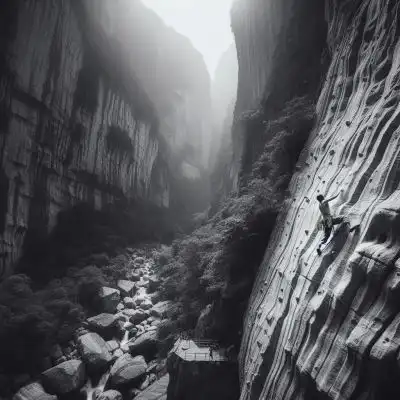
The first few meters were deceptively easy, hand jams feeling solid. But soon, the crack narrowed, demanding delicate finger locks and precise footwork. Every move felt deliberate, a small dance against gravity. The rock offered little respite; finding decent rests was a challenge in itself. My forearms started to burn, a familiar ache that signaled the crux was near.
I paused, breathing deeply, trying to find a mental edge. The crux involved a strenuous traverse to the left, relying on small, sloping holds and a tenuous smear. Committing to the move felt like a leap of faith. With a deep breath, I went for it, pulling hard on the crimps, my body contorting to maintain balance. I managed to clip a quickdraw and let out a shaky exhale of relief.
The remainder of the route, while still demanding, felt almost easy after the crux. The angle eased slightly, and the hand jams became more generous. Topping out on "Vlčí stěna" was a moment of pure elation. The view was breathtaking, a panorama of rolling hills and dense forests. But even more satisfying was the feeling of having conquered "Těžká spára," a route that had tested both my physical strength and mental fortitude. It was a climb I wouldn't soon forget.
Location
Reviews (0)
Helpful Links
© 2025 Climbing Place. All Rights Reserved.