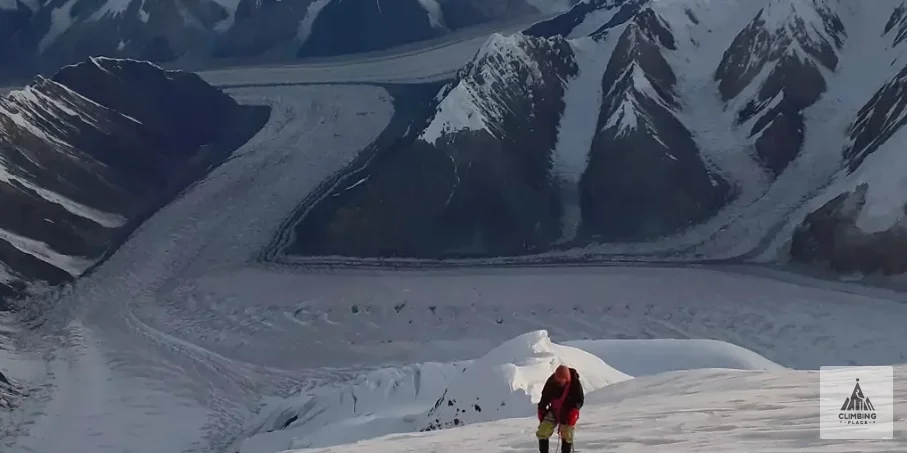
In 2010, Eric Gilbertson stood on top of Denali. It was a personal milestone, but it also got him thinking: if he could climb the highest point in his home country, why not try others?
The terrain varied wildly: some peaks were little more than high hills in Belize or thick bushwhacks through Suriname, while others required full expedition gear on Logan and Aconcagua.
By 2015, Gilbertson and his twin brother Matthew had finished all the North American country high points. South America proved far trickier, mostly due to geopolitics. Venezuela’s highest peak, Pico Bolívar, was closed to Americans for years, which also blocked access to Guyana’s high point along the border. With 32 of the region's 35 national high points done, the project ground to a halt while he waited out the diplomatic deadlock and climbed elsewhere.
When Venezuela resumed issuing tourist visas to Americans in 2026, Gilbertson moved fast. He traveled down, climbed Pico Bolívar, and accessed the Guyana high point from the border area to resolve the long-standing roadblock.
Unlike standard peak-bagging, Gilbertson brought a surveyor's approach to the project. Where elevation data was uncertain—such as in Jamaica, Colombia, and Guyana—he carried high-precision GPS equipment onto the peaks to measure the exact summits himself, occasionally correcting standard reference maps in the process.
The final objective was Huascarán Sur in Peru, a 6,754.9-meter peak increasingly threatened by melting glaciers and falling seracs. After waiting for a viable weather window, Gilbertson launched a night push and reached the summit on July 27, 2026, becoming the first person to complete the high points of every country in the Americas.
With the Americas checked off, he is still working through the remaining global peaks, publishing detailed trip reports and high-precision survey data on countryhighpoints.com as he goes.



Comments
No comments yet.
Sign in to like and comment.