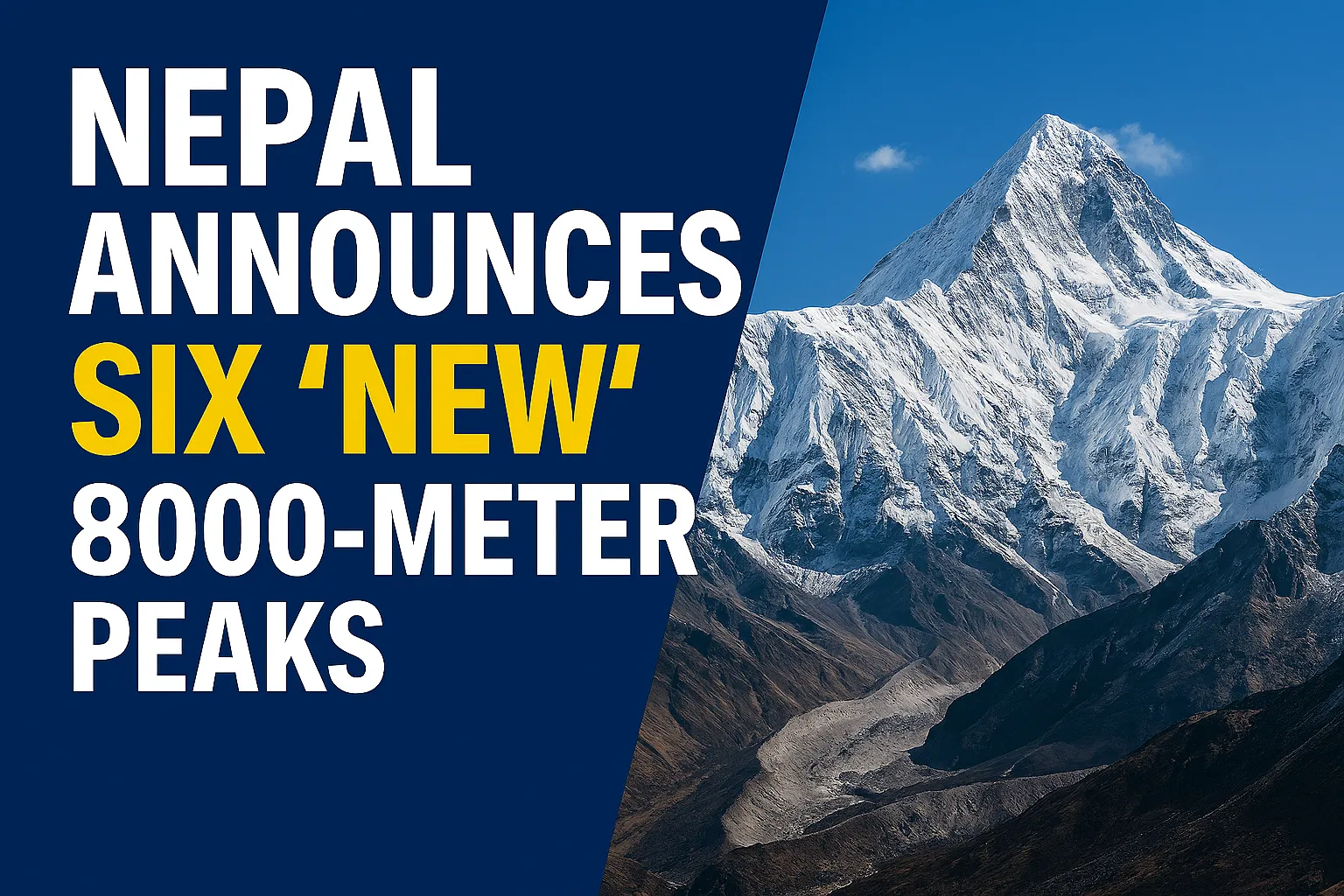
For decades, the "Crown of the Himalaya"—the list of the world's 14 mountains exceeding 8,000 meters—has been the ultimate benchmark in high-altitude mountaineering. Summiting all 14 is a lifetime achievement held by an elite few.
But that exclusive list is about to get much longer. In a move poised to shake up the mountaineering world, the government of Nepal has announced plans to officially recognize six new peaks above 8,000 meters.
A Seismic Shift in Mountaineering
If ratified by international climbing bodies like the UIAA (International Climbing and Mountaineering Federation), this move would expand the coveted list from 14 to 20 peaks. This isn't just a bureaucratic change; it fundamentally alters the landscape of professional alpinism and high-altitude tourism.
Where did these "new" mountains come from?
Crucially, these aren't newly discovered mountains hidden in a remote valley. They are known high points that were previously categorized as subsidiary peaks of existing giants.
While the final official list is pending legislation, the candidates are widely believed to be secondary summits situated on the massive massifs of Kangchenjunga and Lhotse. For example, peaks like Yalung Khang (8,505m), Kangchenjunga Central (8,473m), and Kangchenjunga South (8,476m) have long been climbed, but were considered part of the main Kangchenjunga massif rather than independent mountains.
The reclassification usually depends on "prominence"—how much a peak rises vertically from the lowest contour line encircling it and no higher peak. Nepal is striving to have these six meet the criteria for independence.
Why is Nepal Doing This?
The motivation behind this push is largely economic and strategic for Nepal's vital tourism industry.
- New Challenges, New Permits: By creating a "new" list of 20 peaks, Nepal opens the door for a new generation of record-seekers. Climbers who have already completed the original 14 may return to claim the remaining six.
- Spreading the Crowds: Famous peaks like Everest, Manaslu, and Ama Dablam face significant overcrowding. Officially recognizing new 8,000-meter objectives could help disperse climbers to different areas of the Himalaya, reducing environmental pressure on the most popular routes.
The Race for the "New 20"
This announcement immediately resets the board for speed record holders and peak-baggers. The recent incredible feats of speed climbing the 14 peaks might soon be viewed as the "classic" list, sparking a brand new, fiercely competitive race to be the first person in history to summit the "True 20."
The mountaineering world now watches and waits for official international recognition. If accepted, the history books will need a significant update.
***
What do you think about expanding the list of 8,000-meter peaks? Does it dilute the historical significance of the original 14, or is it an exciting new chapter for the sport? Share your thoughts in the comments below.

Comments
No comments yet.
Sign in to like and comment.