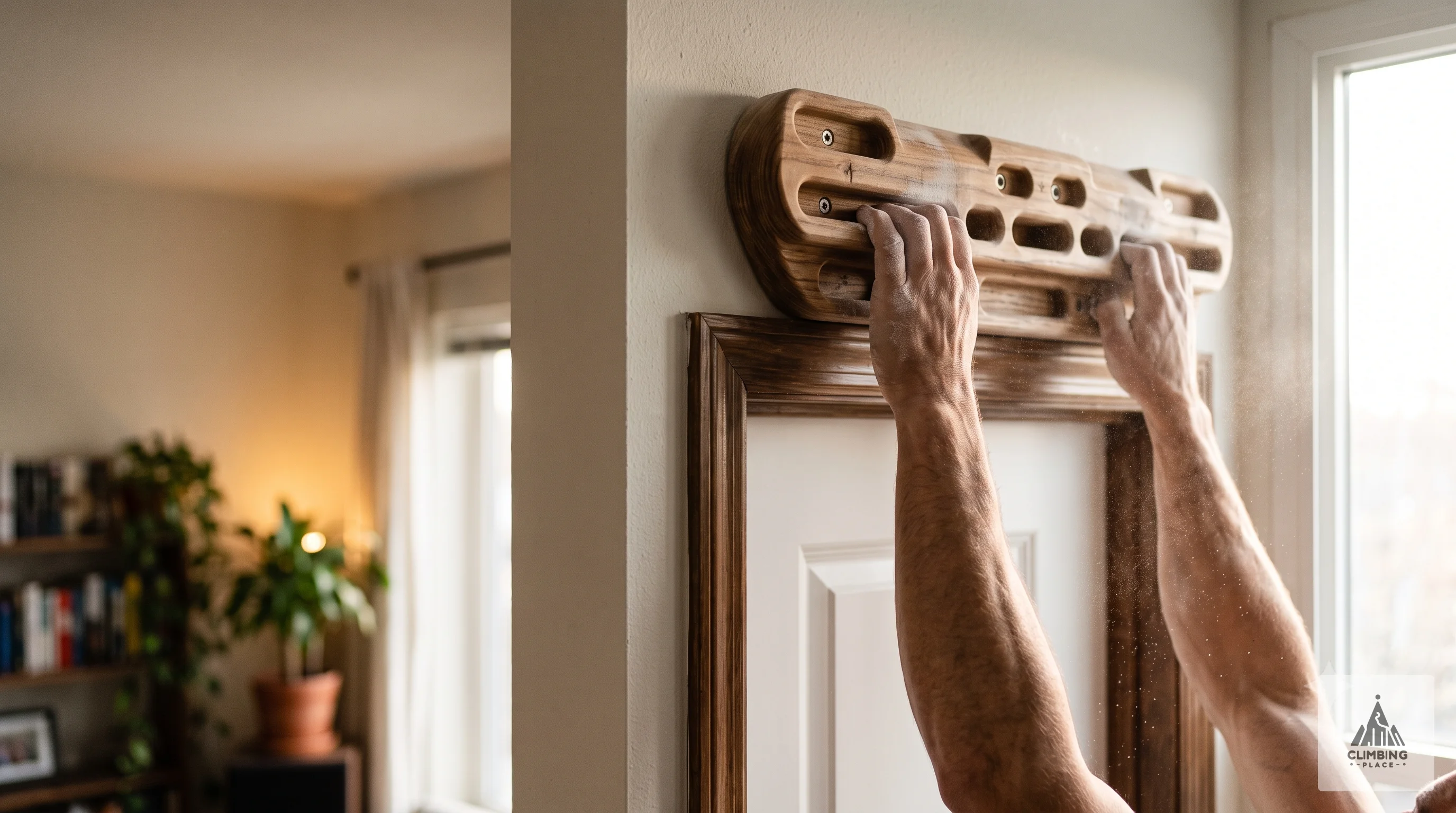
You don't need a wall to get better at climbing. Some of the most useful training happens at home, between sessions – building the strength and resilience that let you climb harder and stay injury-free.
Read this first: finger training is powerful but risky. Tendons and pulleys adapt far more slowly than muscles, and pushing too hard too soon is the fastest route to injury. If you have been climbing for less than a year, your best "finger training" is simply climbing more. Treat the hangboard with patience and respect.
Start with what's safe: antagonists and core
- Push-ups and dips balance all the pulling climbing does. Try 3 sets of 8–12 reps – enough to work the muscles while keeping your joints safe.
- Planks, hollow-body holds and leg raises build the body tension that keeps your feet on the wall on overhangs.
- Shoulder and wrist mobility keeps the joints that take the most load healthy.
When you're ready for the hangboard
After about a year of regular climbing, a hangboard can build the finger strength that unlocks harder grades. The rules are simple: always warm up thoroughly, use large, positive edges rather than small crimps, keep hangs short with full rest between them, and stop at the first sign of joint or finger pain. Less is more.
A simple weekly structure
Two sessions on the wall or on rock, one or two short core and antagonist sessions at home, and at least one full rest day. If you feel constantly tired and stop progressing, you are rarely under-trained – you are under-rested. Consistency over months is what actually makes you stronger.
Train smart, then put it to use: find a gym or a crag on climbing.place.
