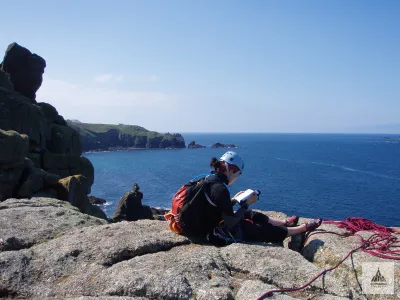
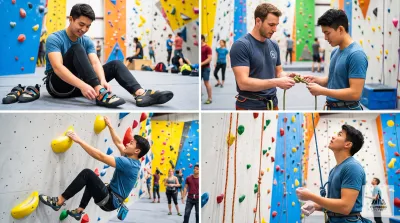
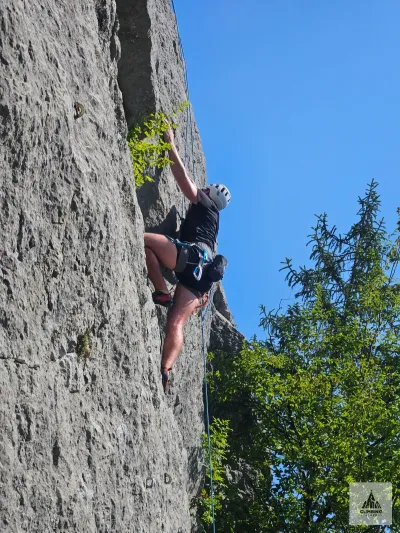
The first time you get on real rock, it lands differently than you expect. There's the good part first — stone that's actually warm from the sun, no music playing, a line nobody bolted with move-by-move flow in mind. And then there's the other part: how alone you suddenly feel. No crash pad under you. No setter who thought about what beginners can reach. Just you, your belayer, and a wall that has no idea what you can do on plastic.
That gap between gym and crag trips up a lot of climbers, but it closes fast once you know what's actually different. This is the stuff we wish someone had walked us through before our first outdoor day — instead of finding it out the hard way, one bolt at a time.
What to bring
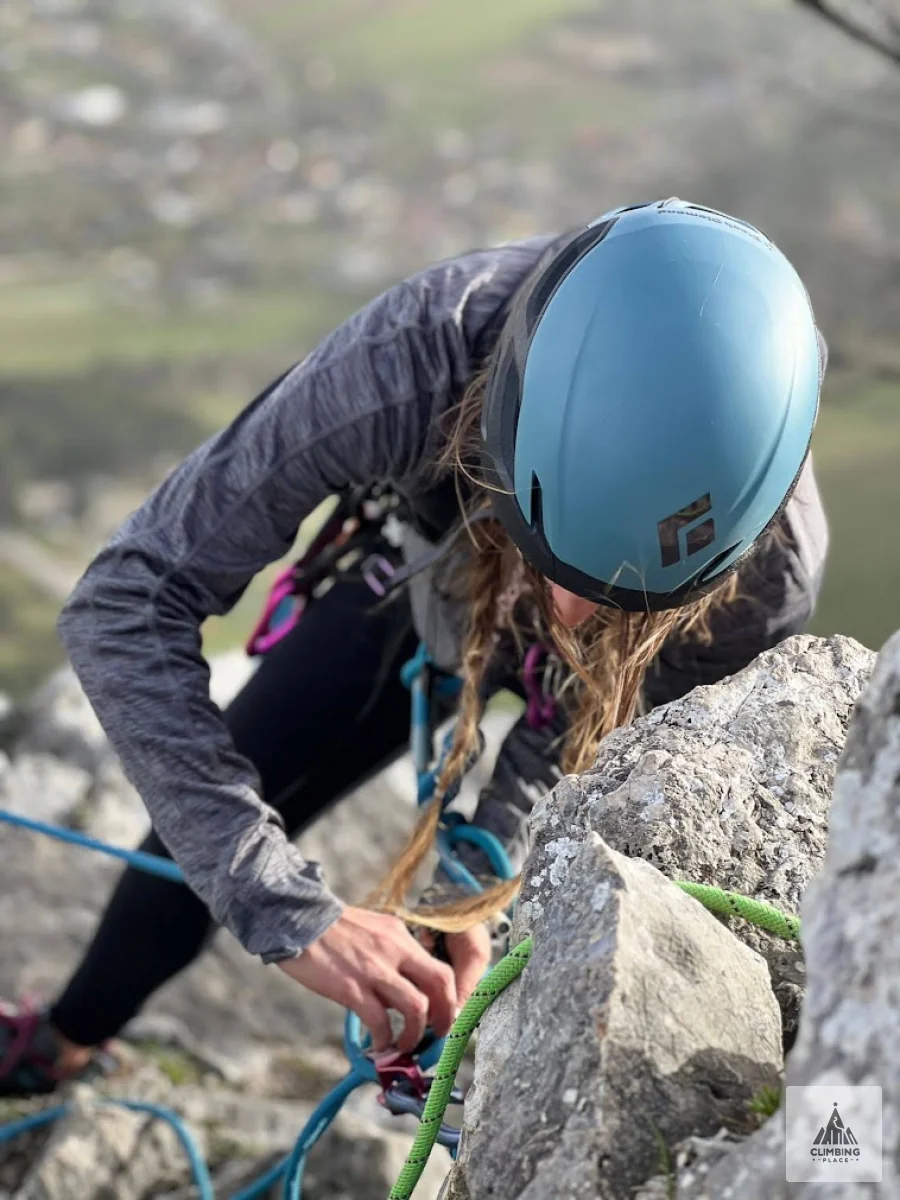
A gym hands you everything you need before you even lace up. Outside, you're building your own kit. For a single-pitch sport day — routes with bolts already in place, which is the easiest way into outdoor climbing — here's what actually matters:
A 70-metre single rope covers nearly every modern sport route you'll run into; a 60 will come up short on some of the longer ones, and getting caught short on rope is not a mistake you want to make outdoors. Bring around twelve quickdraws — count the bolts on the topo and add two for the anchor. Your gym belay device and locking carabiner are fine as-is; something assisted-braking like a GriGri gives you a bit more margin while you're still learning the ropes, literally. A helmet is the one thing people skip that they shouldn't — rock breaks loose, parties above you drop gear, and the ground doesn't negotiate. Put it on as soon as you're at the base, not just when you start climbing. Your gym harness and shoes will do the job, though a slightly stiffer shoe tends to serve you better on real stone than your soft, aggressive gym pair. Round it out with chalk, a guidebook or the route saved on your phone, water, food, and more layers than you think you'll need — crags are colder than gyms, always.
Why the grades feel like they're lying to you
Here's a scene that plays out at every crag: a solid gym climber gets on something two grades below their indoor limit and falls off, completely baffled. They shouldn't be. Gym routes are built by a person who already solved them for you — the holds are obvious, the movement is smooth on purpose. Rock doesn't care about being fair. The holds are wherever they happen to be: sloped, sharp, polished slick by everyone who grabbed them before you. You have to find your own sequence hanging on, not standing on the ground looking up at colored tape. And clipping from an actual stance, arm shaking, burns energy no gym ever trained you to budget for.
My own transition from 6b indoors to real stone started with getting completely shut down on a 5c slab because I couldn't find a foothold that wasn't a frictionless smear. I spent fifteen minutes staring at a blank wall while my belayer froze in the autumn wind.
Leading outside is its own skill
If you already lead indoors, you've got the mechanics down. What changes outside is the margin for error.
- Clips aren't always convenient. Gym bolts sit at friendly heights because someone designed them that way; outdoor bolts go wherever the person who developed the route could actually drill — below your waist, off to the side, right after the crux. Practice clipping from a stable stance instead of stretched out and pumped.
- The ground matters more than you think. A fall before your second bolt is clipped can put you on the deck. Get that first clip in early and don't climb carelessly above your last one.
- Topping out is a skill you have to learn, not a button you press. There's no auto-belay, no chains you lower off without thinking. You'll reach a two-bolt anchor and need to clip in, thread the rope, and clean your draws — calmly, with your weight actually managed. Ask an experienced partner to walk you through it on the ground before you try it up high, and watch them do it once for real.
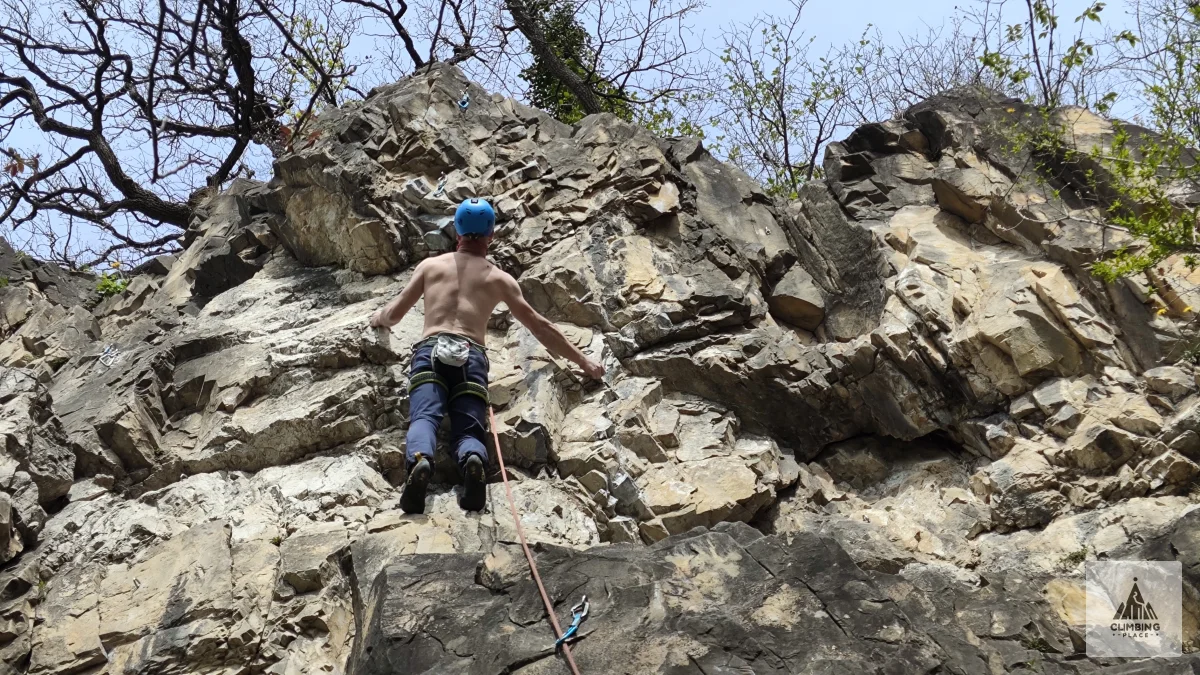
If leading feels like too much for day one, that's completely fine — top-rope instead. Get someone who knows how to build an anchor to set one up, and just climb laps until the rock stops feeling unfamiliar. Nobody's handing out medals for rushing this part.
Reading rock that isn't color-coded
Reading a gym route is basically matching colors. Reading real rock is actual problem-solving, and it pays off fast once you start doing it on purpose. Look at the line from the ground before you tie in — trace where the bolts go, spot the obvious holds, and guess where you'll rest and where you'll clip. Trust your feet more than you want to; outdoor footwork on tiny edges and blank-looking smears will hold you if you actually commit your weight to them. Look for rests as you climb — a good stance, a jug, a stem across a corner — because that's where you recover and plan the next section, and gyms rarely teach you to look for them. And know your way down before you leave the ground: lower off, walk off, or rappel? Work that out while you're still fresh, not while you're tired and clipped in at the top.
The safety net you didn't know the gym was holding
Gym staff quietly manage a hundred small risks you never even notice. Outside, all of that becomes your job and your partner's.
Agree on your calls before you tie in — "climbing," "take," "slack," "lower," "falling," short and unambiguous, ideally rehearsed once so nobody's guessing. Wind eats words at a crag, and a misheard call is how accidents start. Do a full partner check every single time you climb, not just the first time of the day: knot, buckle, belay device, locked carabiner. Complacency is what catches out experienced climbers, not beginners. Keep an eye on the bolts themselves — rusted, spinning, or missing hardware means walk away and find another line, and local route comments online are genuinely useful here. And take the weather seriously: wet rock gets slippery fast, and some sandstone is dangerously fragile when damp. If a storm's rolling in, get down. Exposed rock and lightning is not a combination you want to test.
Fitting in at the crag
Outdoor climbing runs on etiquette nobody writes down but everyone notices. Pack out everything you bring, including things that aren't obviously trash. Brush off your tick marks and go light on the chalk — the rock should look like nobody was there. If someone's waiting and you're projecting a route, let them climb through between your attempts. Keep the noise down; a lot of people come to crags for the quiet as much as the climbing. And respect closures, even the ones that seem overly cautious — nesting raptors, fragile access agreements, seasonal restrictions. Ignore one and the whole area can lose access for everyone, permanently.
Choosing your first crag
Set yourself up to actually enjoy it. Look for somewhere well-documented, with plenty of routes a couple of grades below your indoor level, an aspect that dries quickly after rain, fully bolted sport routes (save trad for later), and close enough to home that a weather change doesn't cost you the whole day.
climbing.place is genuinely useful here — filter routes by location, grade, and style, and read what local climbers have actually written. That's where you'll find the things no guidebook prints: which bolts got replaced recently, which routes turn greasy in summer heat, and where the real easy warm-ups are hiding.
Going outside for the first time isn't something you pass or fail. It's a skill, and it comes from stacking calm, well-prepared days on top of each other. Climb with someone who's done it before if you can. Start well under your limit. Keep your eyes open and leave your ego in the car. Clip into that first anchor on real stone, look down at the ground below you, and you'll understand pretty quickly why people keep coming back to this for the rest of their lives.