Your rope is the single most important piece of safety equipment you own — and the one most people neglect. A well-cared-for rope climbs better, lasts longer, and keeps you safer. The good news is that looking after it takes almost no effort once you know the basics.
Keep it off the dirt
The biggest enemy of a rope isn't falling — it's grit. Fine dirt particles work into the sheath and slowly grind away at the fibres from the inside. Use a rope bag or tarp at the crag so your rope never sits directly on the ground, and you'll dramatically extend its life.
How to wash a rope
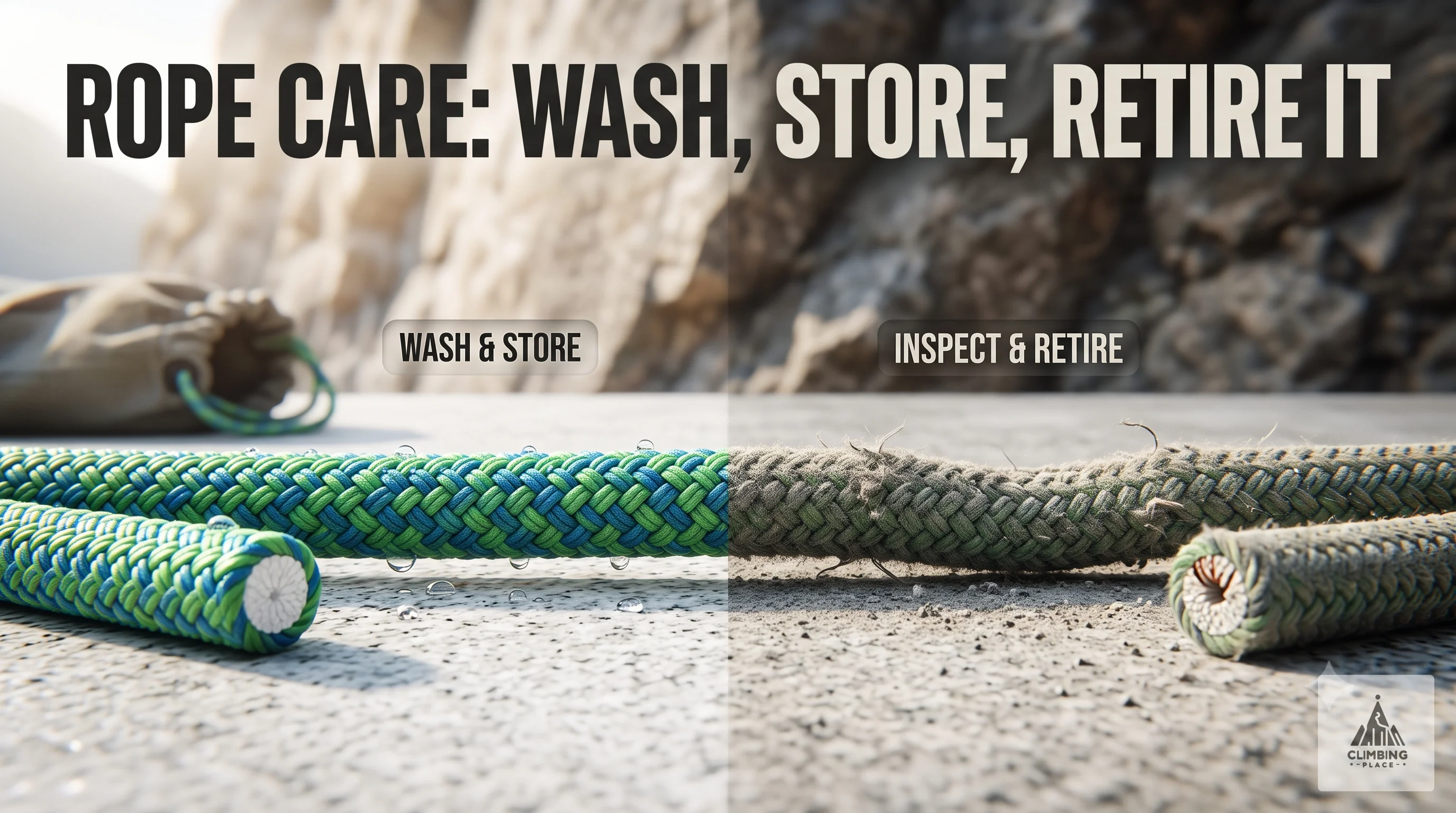
When your rope feels stiff, gritty, or visibly dirty, wash it. Soak and gently agitate it in lukewarm water, using a dedicated rope cleaner or nothing at all — never household detergents or bleach, which can damage the fibres. Rinse thoroughly, then dry it loosely coiled, out of direct sunlight. Never tumble dry.
Store it right
- Keep it cool, dry, and out of direct sunlight — UV degrades nylon over time.
- Store it away from chemicals, especially battery acid and solvents, which can destroy a rope invisibly.
- Coil it loosely or flake it into a rope bag rather than cinching it tight.
Inspect it regularly
Run the entire length of the rope through your hands every so often, feeling and looking for problems: flat spots, soft or mushy sections, a core you can feel through the sheath, fuzzy or cut areas, and stiffness that won't wash out. Your hands will often find a fault before your eyes do.
When to retire a rope
Retire a rope immediately if it has any core damage, a sheath cut deep enough to expose the core, or has held a very severe fall. Beyond that, ropes have a lifespan even with light use — manufacturers give guidance from a few years of heavy use up to around a decade for a rarely-used rope. When in doubt, retire it. A rope is far cheaper than the alternative.
Looking after your gear so you can climb more? Find your next route. Browse climbing.place →
Treat your rope like it's keeping you alive — because one day it will be.