When I bought my first sport setup, I wasted money on gear I didn't touch for two years. For your first outdoor season, you really only need a few basics—costing about what a season pass at the local gym runs.
Shoes come first. Try on a bunch in person. Whatever fits a friend might feel like agony on your feet, so pick a flatter, comfortable fit over anything aggressive. Used shoes and chalk bags are easy enough to pick up second-hand. Safety gear is different. Ropes, harnesses, and helmets should always be bought new unless their exact history is known.
Look for an adjustable harness with decent gear loops, and hang in it at the shop if they let you. Pair that with an assisted-braking belay device and a helmet for outside.
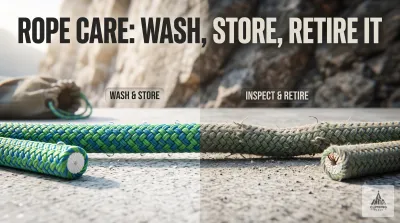
The big expenses split nicely with a climbing partner. One 70m dynamic single rope and 12 to 14 quickdraws get you up almost any single-pitch route. Add a dedicated rope bag or tarp to keep grit off the sheath and prevent tangles. Trad racks, multi-pitch kit, specialized shoes—all of that can wait until actually needed.