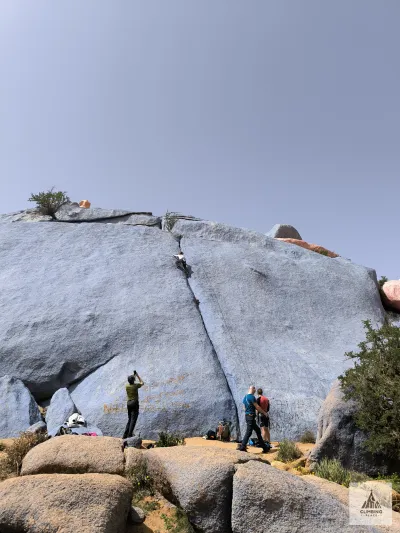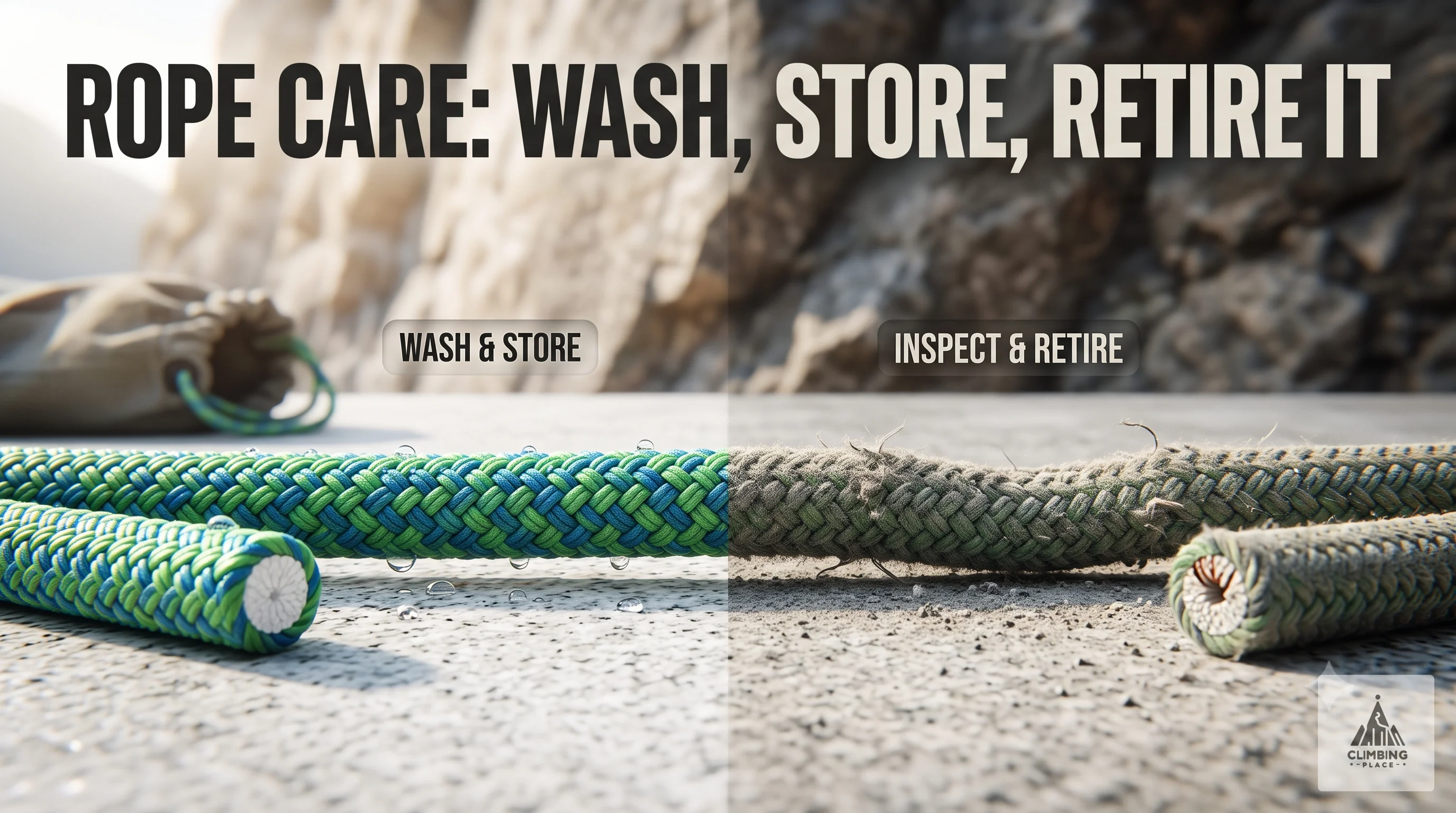
Grit, not falls, is what kills most ropes. Fine dust and sand work into the sheath, grinding down the nylon core from the inside. Keeping a rope off the dirt—using a tarp or rope bag at the crag—is the simplest way to double its lifespan. A gritty rope ruins carabiners, handles like a stiff cable, and wears out from the inside.
Maintenance and Storage
Wash ropes in a bathtub with specialized gear cleaner or, to save your forearms, use a front-loading washing machine on a delicate, cold cycle. Never use a top-loader with an agitator; it will shred the sheath. Avoid household detergents, which strip the nylon's factory coatings. Rinse thoroughly and let the rope dry loosely coiled in a shaded, airy spot. No radiators. No direct sun. No tumble dryers.
Storage is equally critical. UV light slowly degrades nylon, so keep the rope in a cool, dark place. Crucially, isolate it from chemicals—battery acid and common solvents can compromise the core without leaving a single visible mark. Always store it loosely coiled or flaked.
Inspection and Retirement
Flake the rope before every session, running it through your bare hands to feel for irregularities: 'hourglassing,' where the core has shrunk or ruptured, mushy flat spots, or sections that have stiffened into a broomstick. If you see core damage, a deep sheath cut, or if the rope has held a truly violent fall, retire it immediately. Even without incidents, ropes have a finite lifespan, ranging from a few years of heavy use to a decade of light climbing. If you are in doubt about a nick or a soft spot, retire the rope. It is not worth the risk.