Your climbing rope is probably the most important piece of safety gear you own — and ironically, it’s also the one most climbers forget to look after. A rope that’s treated well handles better, lasts longer, and gives you one less thing to worry about on the wall. The nice part is that proper care is simple once you get into the habit.
Keep it off the dirt
The real enemy of a rope isn’t falls — it’s grit. Fine dust and sand work their way into the sheath and slowly chew up the fibres from the inside. Using a rope bag or a tarp at the crag keeps your rope off the ground and dramatically extends its lifespan. It’s a tiny habit that pays off fast.
Washing your rope
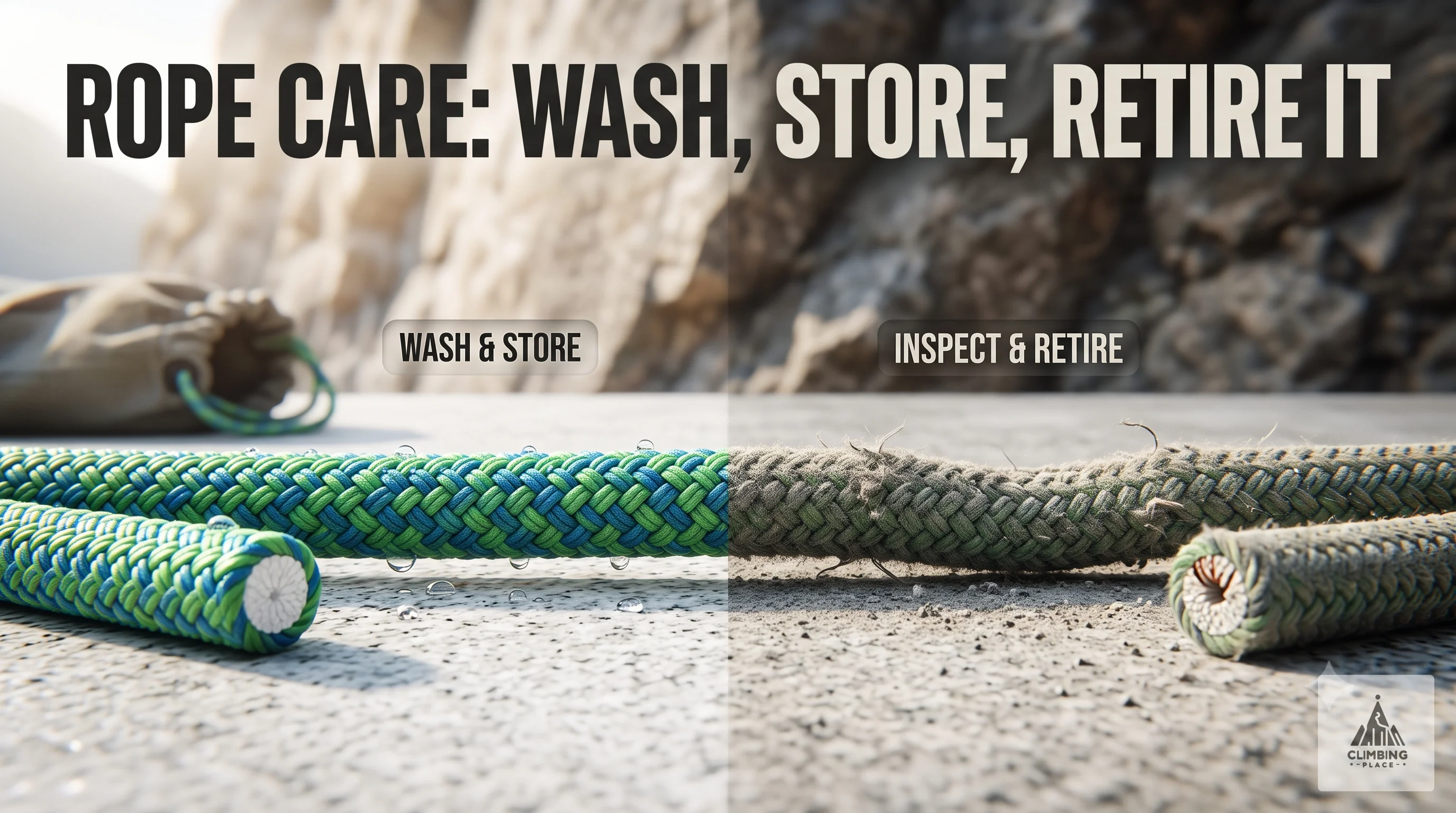
If your rope starts feeling stiff, dusty, or looks like it’s been dragged through a chimney, give it a wash. Soak it in lukewarm water and gently move it around with your hands. You can use a rope-specific cleaner, but plain water is perfectly fine. Avoid household detergents and anything with bleach — those can weaken the fibres.
Rinse thoroughly, then let it dry loosely coiled in a shaded, airy spot. No radiators, no direct sun, and definitely no tumble dryer.
Storing it properly
Keep it somewhere cool and dry. UV light slowly degrades nylon.
Store it away from chemicals — battery acid and solvents can ruin a rope without leaving obvious marks.
Coil it loosely or flake it into a rope bag instead of cinching it tight.
Regular inspection
Every now and then, run the rope through your hands from end to end. You’re looking (and feeling) for flat spots, mushy sections, stiff areas that don’t soften after washing, fuzzy patches, or any place where the core seems close to the surface. Your hands will often catch problems before your eyes do.
When to retire a rope
Retire your rope immediately if you see core damage, a deep sheath cut that exposes the core, or if it has held a truly violent fall. Even without major incidents, ropes have a lifespan — manufacturers usually give a range from a few years of heavy use to around a decade for a rope that only sees occasional climbing.
Looking after your gear so you can climb more? Find your next route. Browse climbing.place →
Treat your rope like it's keeping you alive — because one day it will be.